Workplaces as connected ecosystems
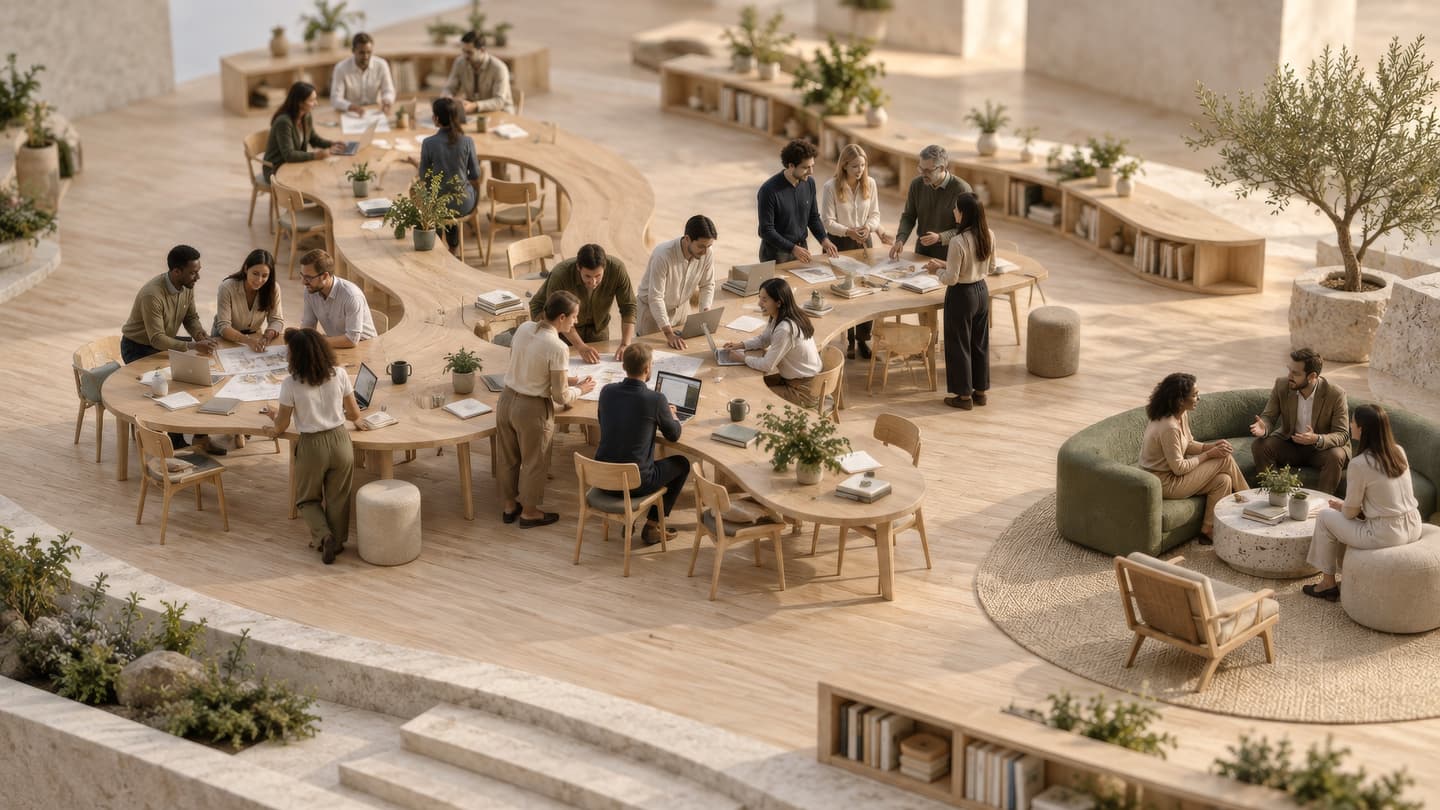
Of all the shifts reshaping space and place, one statistic is particularly revealing: 65% of employees now consider work-life balance more important than salary. It’s a telling measure of today’s market, and one that should reframe every workplace brief.
While the office was never just a building, it’s now one node in a much wider ecosystem: home office, co-working hubs, satellite spaces, digital platforms. People move fluidly between these spaces, often within the same week. Work is far less fixed than it once was.
At the same time, 66% of employees still say the office is where collaboration happens. Yet the most effective workplaces recognise what this figure doesn’t capture: collaboration now needs to extend beyond a single location. That means enabling connection beyond the office walls, through technology and communication, but also through a sense of belonging that reaches people wherever they work.
This changes the workplace design brief. Integrated technology, focus pods, collaboration zones and communal spaces all help people move smoothly between different modes of work. And as workplace design changes, so must the marketing. The job isn’t to list amenities, but to show what they make possible, and give hybrid working somewhere to land. That might mean giving teams a reason to come into the office or giving those working remotely a shared centre of gravity.
The workplaces that get this right aren’t marketed simply as buildings. They’re positioned as the heart of a wider working ecosystem: destinations for community, collaboration and the kind of creative exchange that happens best when people come together.
Source: JLL, Corporate Real Estate Trends to Watch